Avro vs Parquet: Is one better than the other?

Big data has taken the world by storm, and as enterprises worldwide scramble to make sense of it, it continues to hit hard. Given the amounts of data produced daily, not only are they overwhelmed dealing with it, but they are also concerned that their existing ETL pipelines might not be able to cope without a solid data warehousing strategy.
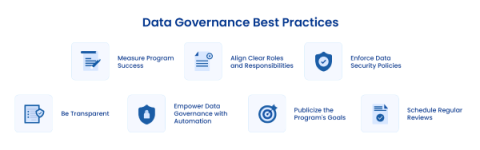
7 Crucial Data Governance Best Practices To Implement

Data governance covers processes, roles, policies, standards, and metrics that help an organization achieve its goals by ensuring the effective and efficient use of information. It sets up the processes and responsibilities necessary to maintain the data’s quality and security across the business. Data governance manages the formal data assets of an organization.

Serverless Decoded: Reinventing Kafka Scaling with Elastic CKUs

Apache Kafka has become the de facto standard for data streaming, used by organizations everywhere to anchor event-driven architectures and power mission-critical real-time applications. However, this rise has also sparked discussions on improving Kafka operations and cost-efficiency—streaming data is naturally prone to bursts and often unpredictable, resulting in inevitable variations in workloads and demand on your Kafka cluster(s).

Data Engineering for AI at Scale with Qlik and Databricks

For data engineers, the Generative AI (Gen AI) era is a transformative shift in how we approach data architecture and analytics. Professionals at the forefront of this shift will be gathering in San Francisco, at the Data+AI Summit June 10-13. Attendees will be exploring tools that integrate with Databricks Intelligent Data Platform that decrease data management costs and improve data's impact on business outcomes.

Modernize Payments Architecture for ISO 20022 Compliance

The payments industry is evolving rapidly, fueled by technological advancements, changing consumer behaviors, and a growing appetite for real-time transactions. As this transformation unfolds, new standards have been introduced to ensure the payments ecosystem's safety, security, and efficiency.

Event-Driven Microservices in Banking and Fraud Detection | Designing Event-Driven Microservices

How do we know whether Event-Driven Microservices are the right solution? This is the question that Tributary Bank faced when they looked at modernizing their old fraud-detection system. They were faced with many challenges, including scalability, reliability, and security. Some members of their team felt that switching to an event-driven microservice architecture would be the magic bullet that would solve all of their problems. But is there any such thing as a magic bullet? Let's take a look at the types of decisions Tributary Bank had to make as they started down this path.