

Systems | Development | Analytics | API | Testing

M5 Pro runners for GitHub Actions, coming to Bitrise Build Hub and Bitrise CI

Apple announced the M6 and M5 Pro on August 25, 2026, both inside the redesigned Mac mini. Bitrise Build Hub will be the first GitHub Actions runner alternative to add them to the fleet. That means your builds run on the newest Apple silicon before any other GitHub Actions runner can offer it. That's not a one-off. We've shipped new runners fast on every Apple silicon generation since M1 all the way up to M4 Pro, and M5 Pro and M6 are next.
Up to 90% smaller updates, secured and free: what's new in Bitrise CodePush

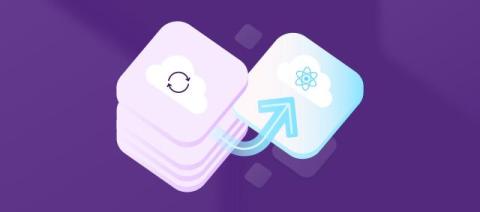
The fundamentals of React Native over-the-air updates shouldn't sit behind a paid tier. Today we're shipping three additions to Bitrise CodePush: delta updates that help significantly reduce the size of your updates, CodePush code signing so you can secure every package you push to your users’ devices, and a dedicated Bitrise CI Step that publishes updates straight from your workflow. All three are available to every CodePush user, including everyone on the free plan.

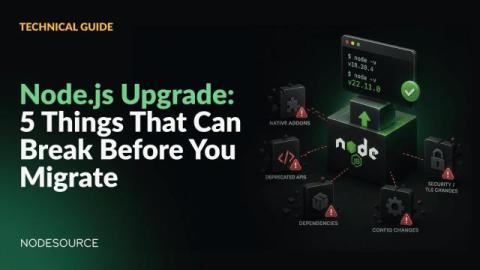
Node.js Upgrade: 5 Things That Can Break Before You Migrate

Updating Node.js can be as simple as installing a new version. But a safe Node.js upgrade is more than changing the number returned by node -v. A major release can affect dependencies, native addons, Node.js APIs, OpenSSL, build environments, and runtime behavior. Before changing the runtime, the first question should be.

AI-Driven Cross-Platform Testing: A Smarter Path for Enterprise QA

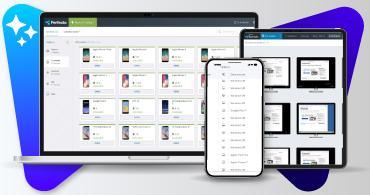
Testing across web, mobile, and performance layers has become one of the hardest problems in enterprise software delivery. Teams juggle fragile scripts, siloed tools, and mounting maintenance work that slows every release. AI cross-platform testing changes that equation, and Perforce Autonomous Testing puts it within reach. In this post, you will learn what AI-driven cross-platform testing is, why it matters for QA leaders, and how Perforce Autonomous Testing works from setup to execution.

How Perforce Built an AI Agent Orchestrator for Code Review, QA, and Bug Fixes

In April 2026, when our Perforce engineering team was introduced to Claude, my team didn't jump straight into using it. We sat down, mapped our entire development lifecycle, and asked one focused question: Where does AI create the highest impact for us, specifically?

Android App Crashes: Causes, Detection, and Fixes

Android app crashes will cost us users and damage our Play Store ranking. To prevent them from happening, we need to understand the most frequent causes of crashes, read the stack trace effectively, and have plans for common painpoints such as null values. This article will give you the tools to do that.

BigQuery MCP Server: Connect Google BigQuery to AI Agents Safely

A BigQuery MCP server lets AI agents like Claude query your Google BigQuery data through a standard protocol instead of ad-hoc integrations. Because BigQuery bills by bytes scanned, an unconstrained agent is not just a security risk but a budget risk: one careless full-table scan on a wide table costs real money. This guide covers what a BigQuery MCP server does, the three ways to set one up, and the cost and security controls that matter before you let an agent anywhere near your analytics data.

Utility API & AI Security: Exposing Data Without Exposing Control

Every utility is being pulled in two directions. Operations, engineering, and customer-facing teams all want data in modern applications: outage maps, field-service apps, asset-health dashboards, regulator reporting, and increasingly AI assistants that can answer questions about generation, load, or maintenance history. At the same time, the security team's job is to make sure none of that convenience becomes a path into systems that open spillway gates, trip breakers, or control pressure.

Stop API Breaking Changes: Schema Contracts Tutorial | DreamFactory

Someone adds a column. Six weeks later a consumer breaks. Schema Contracts are opt-in. Lock a table and you get a versioned hashed snapshot. Two knobs after that. Mode decides what promotes. None means no contract. Auto promotes additive drift and holds breaking. Strict holds everything for review. Runtime enforcement decides if the live API obeys the lock. Off is docs and drift only. Shape response strips extra fields. Strict also rejects writes that name a field you did not publish.