Systems | Development | Analytics | API | Testing

What is an MCP Registry? The Centralized Directory for AI Agents

A guide to learning how MCP registries help govern AI agent-to-tool connectivity AI agents are only as capable as the tools they can reach. When an agent needs to query a database, file a support ticket, or pull data from a CRM, it has to find the right tool, authenticate, and invoke it — all at runtime. The Model Context Protocol (MCP) standardizes how agents communicate with these tools. But MCP alone does not answer a fundamental question: how does the agent know which tools exist?

How to Prevent AI Hallucinations: 3 Hidden Threats When AI Analyzes Your Data

A VP of Marketing presents an AI-generated performance review on a Monday morning. The CAC numbers are clean. The trend lines are directional. The exec summary recommends a $200K budget reallocation from paid search to organic content. The CFO nods. The budget shift is approved before lunch. Two weeks later, an analyst spot-checks one figure against the source system. The number doesn’t exist anywhere in the connected data.

AI in Credit Underwriting: Improving Risk Assessment Accuracy

For years, credit underwriting was pretty straightforward. Lenders looked at a few fixed factors like credit scores and income, to decide who was worthy of a loan. If you didn’t fit the criteria, you were simply rejected. It worked, but only to a point. This approach left out many people who were actually creditworthy and often missed subtle shifts in market stability.

Flaky Tests in Test Automation: How AI Is Finally Solving the Problem

You push a commit. The pipeline goes red. You run it again and get green. No code changed. Nothing in the environment changed. And yet, the result is different. If that sounds familiar, you're not alone. Flaky tests in test automation are one of the biggest hidden productivity drains in modern software delivery, and most teams are still treating them as a minor annoyance rather than a systemic problem. Spoiler: they're not minor. And the way teams traditionally try to fix flaky tests? It mostly backfires.

We built a Custom Transport for Vercel's AI SDK

Ably is a realtime messaging platform, it's a pub/sub product where you can publish messages to channels and clients subscribed to those channels will receive those messages in realtime. It turns out that the Ably realtime platform is really well suited to being the transport that sits between your AI models and the clients receiving the generated responses.
Sponsored Post

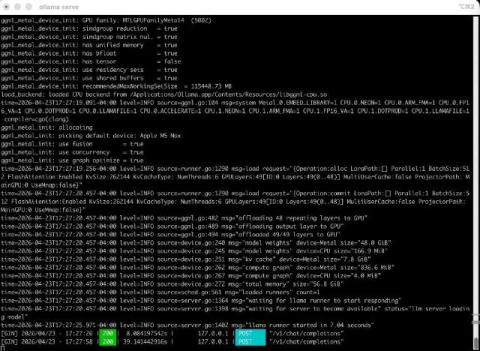
Run Local LLMs on Mac to Cut Claude Costs

Part of the motivation for this post is how cloud API economics are shifting: Anthropic is moving large enterprise customers toward per-token, usage-based billing (unbundled from flat seat fees), which makes "always call the API" a moving cost line for teams at scale. A hybrid or local layer is one way to keep spend bounded while you still use premium models where they matter.

Custom Fleet Management Software Development | 2026 Market & Opportunity

Roughly 35 million commercial vehicles are operating across the world's top logistics markets today. Every one of them is burning fuel, accumulating wear, and navigating roads that are more congested, more regulated, and more expensive to operate on than ever before. The numbers behind inefficiency are staggering. According to the Department of Energy and the Argonne National Laboratory, 6 billion gallons of gasoline are wasted by idling alone every single year.

PostgreSQL MCP Server: Setup, Security & Best Practices for AI Agents

Last updated: May 2026 A PostgreSQL MCP server is a service that exposes PostgreSQL databases as tools an AI agent can call through the Model Context Protocol (MCP). Rather than giving an LLM direct database credentials, you put an MCP server between the agent and the database. The agent discovers what queries it can run, calls them as named tools, and the MCP server translates those calls into safe, governed SQL against PostgreSQL.

News Analysis 2026: How Serverless Architecture Is Transforming Performance Testing

In just a few years, serverless architecture has moved from an emerging trend to a core pillar of enterprise IT. By 2026, platforms like AWS Lambda, Azure Functions, and Google Cloud Functions are handling production workloads at scale for organizations worldwide. The draw is clear: instant scalability, no server management, and a usage-based billing model that can lower costs for unpredictable workloads.