Systems | Development | Analytics | API | Testing

The Future Is Already Here-And It's Agentic

Let me take you on a journey—not into some far-off sci-fi future, but into a tomorrow that’s just around the corner. Imagine this: you walk into your workplace and some of your “colleagues” are no longer human. They’re not robots in the traditional sense, but agents—autonomous software entities, each trained on vast datasets, equipped with decision-making power, and capable of performing economic, civic, and operational tasks at scale.

From hours of Kafka troubleshooting to insights in minutes

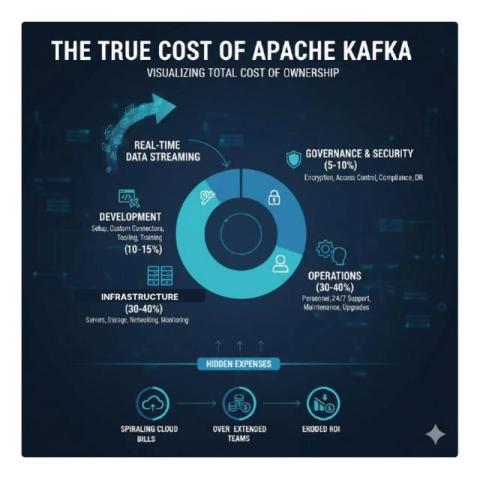
You're three hours into debugging a stalled Kafka consumer. The lag is climbing. Customers are complaining. Your logging doesn't show anything useful, and changing the log level requires a deployment approval that won't come until tomorrow morning. Sound familiar? If you're operating Apache Kafka at scale, that sinking feeling when a consumer group stops progressing, and you're left playing detective with insufficient clues.

WSO2 Kubernetes Gateway + Moesif API Analytics: Drive API Performance and Adoption

WSO2 Kubernetes Gateway provides a robust, Kubernetes-native platform for managing APIs. It’s purpose-built for cloud-native teams requiring fine-grained control over APIs in modern, distributed environments. With support for microservices architecture, secure ingress, and service discovery, Kubernetes Gateway solves the infrastructure side of the API equation.

Preventing Data Leakage in Gen AI Chatbots: What's Your Risk Appetite?

Chatbots are quickly becoming more sophisticated and integrated into business workflows, enhancing productivity and scalability. However, they also expand the attack surface for organizations. This new exploitation vector requires data engineers and security teams to incorporate various security guardrails when building their gen AI architecture. In this blog post, we discuss the risk of data leakage through AI chatbots.

Fresh Off the Jet: Insights from the Snowflake and Databricks Summits

After two weeks of immersion at the Databricks Data + AI Summit and Snowflake Summit, it’s clear that the pace of innovation is accelerating faster than ever. Both events showcased groundbreaking advancements in AI, data orchestration, and table formats, with Iceberg, catalogs, and hybrid customer personas emerging as the key themes. Below are some analysis on the trends shaping the modern data ecosystem.

5 Principles for Building Safe, Effective Enterprise AI Systems

In March 2024, the European Union passed the AI Act. This sweeping regulation reshapes how organizations deploy and manage AI systems. The law addresses AI risks that could affect both individuals and businesses, from hiring biases to critical infrastructure failures. Similar rules have started taking shape across the world, including several state-based regulations in the US. But the regulation is only the floor. We all share the responsibility of creating a safe, responsible AI future.

Katalon and RMIT expand strategic partnership to build an AI-ready workforce

Katalon officially signed a Memorandum of Understanding (MOU) with RMIT University Vietnam. This collaboration aims to bridge academic learning with real-world software development and software testing expertise, equipping students with an adaptive mindset, future-ready skills and AI tools. Leaders and representatives from RMIT Vietnam and Katalon at the MoU signing ceremony.

What Does Enumerate Mean In Python

When you use loops in Python, there are a lot of times when you don’t just want the item from a list, you also want to know where that item is in the list. For example, going through a list of names and needing to show their position, like “1. Alice”, “2. Bob”, and so on, or you could be building a menu where each option needs a number next to it. In these situations, Python’s enumerate() function is very helpful.