Systems | Development | Analytics | API | Testing

Building Efficient Data-Driven Apps: A GraphQL Tutorial for iOS App Developers

GraphQL is a query language and runtime for APIs, developed by Facebook in 2012 and later open-sourced in 2015. And it has changed the way we fetch data from our server. Typically, most front-end clients – like React, Angular, Vue, or mobile apps like iOS and Android – use REST APIs to fetch data from the server. REST APIs require more HTTP calls than GraphQL, which leads to over and underfetching.

How to Build Accurate and Scalable LLMs with ClearGPT

Large Language Models (LLMs) have now evolved to include capabilities that simplify and/or augment a wide range of jobs. As enterprises consider wide-scale adoption of LLMs for use cases across their workforce or within applications, it’s important to note that while foundation models provide logic and the ability to understand commands, they lack the core knowledge of the business. That’s where fine-tuning becomes a critical step.

Generative AI Is The Key To Transforming The Telecom Industry

The telecom industry is undergoing a monumental transformation. The rise of new technologies such as 5G, cloud computing, and the Internet of Things (IoT) is putting pressure on telecom operators to find new ways to improve the performance of their networks, reduce costs and provide better customer service. Cost pressures especially are incentivizing telecoms to find new ways to implement automation and more efficient processes to help optimize operations and employee productivity.

Hello, Continual: The AI copilot platform for applications

If you’re building an application today, one of your top product priorities for 2024 is almost certainly adding an AI copilot to your application. AI copilots – AI assistants powered by large language models (LLMs) and deeply embedded into applications – offer one of the most compelling opportunities to reimagine applications since the dawn of the internet.

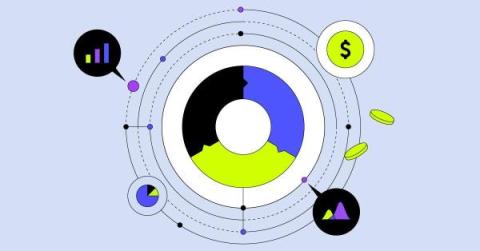
Top 7 data visualization examples you need to know

Data is key to building resilience and achieving operational excellence—but first, your data must be intelligible. Luckily, modern BI solutions have intuitive interfaces that allow business users to build interactive data visualizations and contextual data stories. With this knowledge at their fingertips, your entire organization is empowered to make data-driven decisions.

What is Katalon TestCloud? Key Strengths, Use Cases, and Best Practices

Today, efficient and scalable testing solutions are crucial. As applications grow in complexity and the frequency of releases increases, the need for a more robust, automated, and integrated testing framework becomes critical. To meet these challenges, we created Katalon TestCloud, a cloud-hosted solution that delivers on-demand, flexible, and secure multi-browser/platform and mobile testing environments.

Tightening Bearer Token Authentication with Proof-of-Possession Tokens Using Kong

In token-based architecture, tokens represent the client’s entitlement to access protected resources. Access tokens (or bearer tokens as they're commonly known) are issued by authorization servers after successful user authentication. The tokens are passed as credentials in the request to the target APIs which inform the API that the bearer of the token is authorized to access the API and perform certain actions.

No more refreshing: Achieving low latency data with Ably and Confluent Cloud

Realtime data is rapidly becoming a standard in many consumer applications. From responsive chat applications to low latency financial applications, nobody wants to refresh their browser for new data. With lots of data bouncing around Kafka behind a firewall, it begs the question of how you can serve this information to your users without sacrificing on latency. Ably provides a seamless way to serve this data to your end users devices, globally, through a direct integration with Confluent Cloud.

How to Optimize MongoDB Performance for Node.js

To update a document in MongoDB, I used to fetch it, update the values, and save back the entry. I would question the need for an update method. Looking back, it's evident that performance optimizations were hardly a concern when working on a personal project. Working with a larger dataset is a whole different story, though. This is where no-code tools can't help. In this article, I'll share some of my learnings when it comes to working in MongoDB with millions of documents.