Systems | Development | Analytics | API | Testing

Pre-Packaged Inference, Production-Grade: AMD AIMs with ClearML

Running production LLM inference on a new accelerator family is a layered problem. The model matters. The runtime that exists for the GPU you have matters at least as much. So does the precision mode that works without losing accuracy, the inference engine that hits your throughput targets, and the secure endpoint the rest of your stack can actually call. The entire stack underneath the model is where most of the real engineering work lives and where the cost of getting it wrong shows up first.

Explainable AI in Customer-Facing Analytics: How Yellowfin Turns Predictions into Action

Predictions alone are no longer enough. A churn score is not useful if no one trusts it, and a risk score does not help if the next step is unclear. The same goes for a recommendation engine. People need to know why a model made a call, and what action comes next. That is the core shift in explainable AI for analytics. The work has moved from “what happened?” to “why did it happen, and what should I do now?” Customer-facing analytics depends on that shift.

10 Best Google Data Studio (formerly Looker Studio) Alternatives for Analytics in 2026

On April 11, 2026, Google renamed Looker Studio back to Data Studio to end years of confusion with the enterprise Looker product. The rename did not change the underlying architecture: Data Studio remains a visualization layer, not a data integration platform. That means the moment you need sources beyond Google Analytics, Google Ads, and BigQuery, you are handling extraction, transformation, schema changes, and cross-platform normalization on your own, or paying for connectors that do it for you.

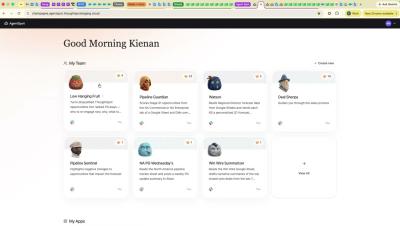
Your AI Projects Need a Platform

In my younger days, eons ago in tech years, I worked on many enterprises IT projects or saw them up close. Failure rates of these projects were incredibly high. There was a mortgage system that was expected to be live in six months but ended up taking over five years and went live with a small fraction of the features originally planned. Many other projects never got out of the development phase.

Meeting Data (and Analytics) Engineers Where They Are: Introducing the dbt Adapter for Confluent Cloud

dbt is the most commonly used tool by data engineers to define SQL transformations (as models), write tests, generate documentation, and deploy through CI/CD and now it’s available with Confluent Cloud too! The magic of dbt is that it brings the engineering rigor to modern data work and data engineering, regardless of the underlying compute source - Snowflake, BigQuery, Databricks, Redshift or Confluent. You can find out more about the launch in our Q2 Confluent Cloud Launch post and the keynote.

Ready Set Code! The Telemetry Tsunami

Welcome to Ready Set Code! The game show where data engineers face off to prove who can build faster. In today's episode, "The Telemetry Tsunami," three contestants face a massive flood of nested JSON telemetry data. Their mission: flatten the arrays, join it to customer tables, and deploy a secure automated pipeline. Who will separate themselves as a data driver vs. a data downer? Find out now! Type Less. Build More.

Streaming highlights from Databricks Data + AI Summit

Join Tun Shwe and Jeremy Frenay as they stream live from the floor of the Databricks Data + AI Summit! They’ll break down the biggest announcements, key takeaways, and cutting-edge trends shaping the intersection of AI and data streaming. Register to get an insider look at the future of data AI streaming.

Guessing AI vs. Verifiable AI: Why the Difference Matters in Finance

I asked Claude what the cash position would be at year-end. The answer was about 30% off. A CFO said this at a finance leaders breakfast in Prague. Almost every CFO in the room had a version of the same story. The problem is not the model. Claude is not bad at maths. The problem is what the model was reasoning over - raw financial data with no governed definitions, no intercompany rules, no agreed methodology for what 'cash position' means at that specific company.

Why Your Rolling Forecast Is Always Stale

Every FP&A team knows the feeling. The reforecast was published on Monday. By Wednesday, someone in sales has closed a deal that changes the revenue picture. By Friday, procurement has flagged a cost overrun that nobody modelled. The forecast is four days old and already partially wrong. This is not a forecasting problem. It is a data pipeline problem. Finance teams hired analysts for their analytical skills.