Systems | Development | Analytics | API | Testing

EP 7: Women Leaders in Technology: The Art of Getting Stuff Done with NVIDIA's Kari Briski

For the inaugural episode of Women Leaders in Technology on The AI Forecast, we’re joined by one of the top female leaders in the technology industry, Kari Briski - Vice President of AI Software Product Management at NVIDIA. Kari shares the stories and strategies that inform her leadership style–like GSD or “getting stuff done”–what it means to trust your instinct, and the advice she gives to young women embarking on a career in tech and to women further along who feel stuck where they are.

AI-Driven SOC Transformation with Cloudera: Enhancing Security Operations with Agentic AI

Security Operations Centers (SOCs) are the backbone of organizational cybersecurity, responsible for detecting, investigating, and responding to threats in real-time. Yet, the increasing complexity and volume of cyber threats present significant challenges. SOC teams often grapple with alert fatigue, skill shortages, and time-consuming processes.

The AI Tipping Point: What Telecommunications Leaders Need to Know for 2025

AI is proving that it’s here to stay. While 2023 brought wonder, and 2024 saw widespread experimentation, 2025 will be the year that telecommunications enterprises get serious about AI's applications. But it’s complicated: AI proofs of concept are graduating from the sandbox to production, just as some of AI’s biggest cheerleaders are turning a bit dour.

The Marketing Agency of the Future: Powered by Unified Data, Trust and AI

We are entering a new era for marketing and advertising agencies. From evolving consumer expectations and increasingly stringent privacy regulations to the rise of AI, the landscape is shifting rapidly. To remain competitive, agencies need to reimagine how they operate. The winners will be those that adopt forward-thinking data strategies, build trust with partners and clients, and leverage AI to deliver real-time insights and personalized campaigns.

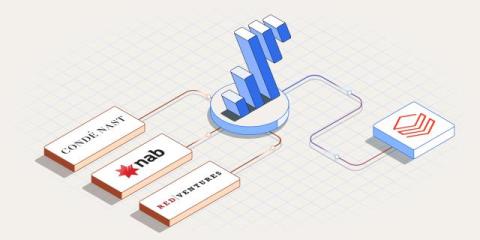
Allium and Confluent: How to Build a Foundational Data Platform for Blockchain

Blockchains enable individuals and organizations to record and verify transactions as part of a secure, transparent, and decentralized system. They form the basis of most cryptocurrencies, and are used as the foundation of many other applications—smart contracts, supply chain management, and digital identity verification, to name but a few.

Shared Destiny with Snowflake Horizon Catalog Built-In Security

Security has been an integral capability of Snowflake since the company was founded. Through the customer-configurable security capabilities of the Snowflake Horizon Catalog, we empower security admins and chief information security officers (CISOs) to better protect their environments and centralize threat monitoring and role-based access controls across clouds.

The Only Guide You Need to Set up Databricks ETL

Databricks is a cloud-based platform that simplifies ETL (Extract, Transform, Load) processes, making it easier to manage and analyze large-scale data. Powered by Apache Spark and Delta Lake, Databricks ensures efficient data extraction, transformation, and loading with features like real-time processing, collaborative workspaces, and automated workflows.

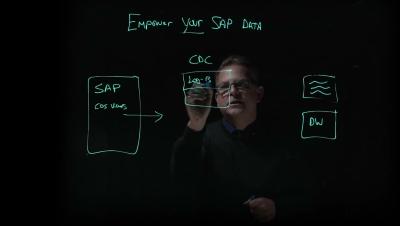
Empowering Real-time Data Replication: Unleashing the Potential of Qlik Replicate and Amazon MSK

In the current data intensive world we live in many customers deal with heavy volumes of data that reside in databases and streaming systems. There are many ways to move data from one cloud platform to another, but for efficient migration, ease of use/development, and near zero downtime, a tool that does continuous near real-time data movement and CDC (change data capture) is needed.

Unlocking Geospatial Data in Snowflake: Store, Analyze, And Visualize At Scale

Snowflake provides for seamless handling of geospatial data, making it easier to work with location-based information directly in your data platform. In this video, we explore Snowflake’s native support for geospatial data, which allows you to store, process, and analyze spatial information at scale. Geospatial data is important because everything happens somewhere. By breaking down silos and combining spatial and non-spatial data, Snowflake empowers you to uncover valuable insights across a wide range of use cases —from mapping to location analytics to geospatial trends.