

Systems | Development | Analytics | API | Testing

3 Strategies for Achieving Data Efficiency in Modern Organizations

In today's digital age, organizations are experiencing an unprecedented increase in data generation. In 2010, the world stored about two zettabytes of data, and this number is expected to hit 175ZB in 2025. This immense growth underscores the importance of data efficiency in modern organizations. Data efficiency ensures that data is stored, processed, optimized for performance, and managed—cost effectively.

Ensuring Today Leads to a Sustainable Tomorrow

Earth Day gives us all the opportunity to raise awareness, reflect and take action to support a sustainable future. The day, which offers so many ways to get involved, means many things to different people. Fortunately, in the data infrastructure business, there are many areas where we can make improvements to support resilience, efficiency and optimization. At Hitachi Vantara, we’re committed to the principles of sustainability and responsible business practices.

How Cloudera Helps Enterprises Meet Their ESG Goals

Across the globe, organizations are united by one shared priority: sustainability. While committing to environmental, social, and governance (ESG) initiatives is simply the right thing to do to preserve our planet for future generations, businesses face additional pressure to prioritize sustainability via regulations, expectations from investors, and consumer preferences. Since 2019, thousands of companies have committed to achieving net-zero emissions.

Our Power, Our Planet: Qlik's Commitment to a Sustainable Future

Happy Earth Day 2025! This year's theme, "Our Power, Our Planet," resonates deeply with Qlik's ongoing commitment to environmental stewardship. We believe that creating a sustainable future requires a collective effort, and we're dedicated to prioritizing and embracing renewable energy sources. Our goal is ambitious: to triple the use of clean energy sources by 2030.

What is an AI Voice Agent? A Comprehensive Guide

Voice is the most commonly used form of communication for humans, and it is also the most information-dense. Plus, for the first time in history, generative AI has made it programmable to the extent that an AI voice agent can hold conversations almost indistinguishable from humans. But what exactly are AI voice agents, how do they work, and how can enterprises build AI voice agents for their workflows? Learn all this and more in this blog!

Guide to Consumer Offsets: Manual Control, Challenges, and the Innovations of KIP-1094

Consumer offsets are at the heart of Apache Kafka's robust data handling capabilities, as they determine how data is consumed, reprocessed, or skipped across topics and partitions. In this comprehensive guide, we delve into the intricacies of Kafka offsets, covering everything from the necessity of manual offset control to the nuanced challenges posed by offset management in distributed environments.

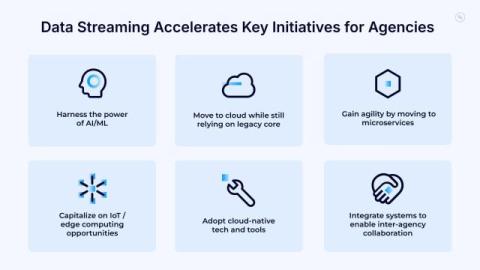
Agencies Win With Data Streaming: Evolving Data Integration to Enable AI

With data streaming, public sector organizations can better leverage real-time data and modernize applications. Ultimately, that means improving the reliability of services that agencies and citizens depend on, enhancing operational efficiency (therefore cutting costs), and delivering critical insights the moment they’re needed.