Systems | Development | Analytics | API | Testing

Achieve Complete Observability Over Your Data Pipelines

Data teams today manage hundreds of moving parts, from sources and syncs to transformations and warehouses, yet often find out something’s broken only after dashboards go blank or reports turn unreliable. When every second of data downtime affects critical decisions, visibility isn’t optional; it’s essential.

From Observability to Pull Request: N|Solid 6.3.1 Brings AI-Driven Performance Fixes to GitHub

At NodeSource, we’re continuously enhancing N|Solid’s AI-powered optimization workflow, helping teams identify, validate, and implement performance improvements faster and more securely. Our latest release N|Solid 6.3.1, introduces GitHub PR and MCP (Model Context Protocol) Integrations, The Model Context Protocol (MCP) is an emerging standard that allows AI systems to communicate securely with external tools and repositories.

LLM Observability Tools in 2025

1. Organizations have moved beyond pilots and are embedding LLMs into production workflows across customer support, finance, security, and software delivery. 2. LLM observability mitigates risks like hallucinations, bias, compliance breaches, and runaway costs. 3. LLM observability requires prompt/response tracking, hallucination detection, drift monitoring, RAG pipeline visibility, and long-term context tracing. 4.

Intelligent Observability: How AI is Transforming Node.js Telemetry into Actionable Optimization

Performance monitoring for Node.js has always been about two things: collecting the right telemetry and turning that telemetry into fast, confident action. With applications growing more distributed and expectations for reliability and speed rising, traditional dashboards and manual triage are no longer enough. For organizations running Node.js at scale, identifying performance bottlenecks, memory leaks, or CPU spikes can be complex and time-consuming.

Inside Observe's Series C $156M Funding Round And The Future of Observability

Observe just closed a $156 million Series C funding round, but that's only part of the story. In the last year, the company has tripled its revenue, doubled its enterprise customer base, and achieved an incredible 180% net revenue retention rate. Snowflake's Ryan Green sits down with Observe CEO Jeremy Burton for a deep dive into the strategy, technology, and leadership behind their growth. The conversation goes far beyond the funding announcement to explore the core of what makes Observe a leader in the shift to AI-powered observability.

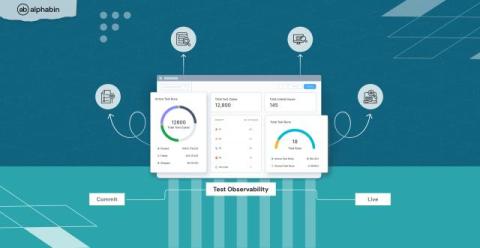
Test Observability Explained for Engineering Leads

Last quarter, something remarkable happened that reminded me why I love working in software testing. I was consulting with a major retail client preparing for their Memorial Day sale, traditionally their second-biggest revenue event of the year. We had just implemented test observability across their entire suite of 3,000+ automated tests. And instead of frantic debugging sessions and emergency war rooms, I watched our dashboards reveal insights in real time.

Modern apps broke observability. Here's how we fix it.

This article originally appeared on DevPro Journal. We’re sharing it here for our audience who may have missed it. For years, APM tools were everyone’s go-to solution for understanding how software behaved in production. And for a time, they worked, because architecture was simpler. Developers owned the backend, the frontend, and the data layer. Everything lived inside a monolith. If something went wrong, they could trace it through their codebase and fix it.

Real-Time Observability for Node.js - Without Code Changes

Observability isn’t a luxury, it’s a necessity. But for teams managing large Node.js applications, getting real-time visibility into performance, memory usage, async behavior, and security can be a complex and risky endeavor, especially if it means modifying your production code. That’s where N|Solid by NodeSource changes the game. Imagine getting deep, real-time insights into your Node.js applications without touching a single line of your business logic.

Understanding AI Observability: Improve Efficiency, Security & Costs

In this video, Jason Mattis breaks down the fundamentals of AI observability, explaining its crucial role in managing and optimizing generative AI systems. Learn about the three core pillars—data monitoring, model explainability, and diagnostics—and how mastering these can help your organization ensure data privacy, maintain model accuracy, manage costs, and enhance overall AI performance.