Systems | Development | Analytics | API | Testing

You Outgrew Excel. Now What?

You've outgrown Excel for consolidation. But what comes next? Anaplan starts at $200K+ - and still assumes your data is already clean. Your data team wants to build something custom - but "three months" always becomes twelve. And every vendor says they're the answer. This guide compares every realistic consolidation path side by side. Real costs, real timelines, real trade-offs. Including when staying with Excel is still the right call.

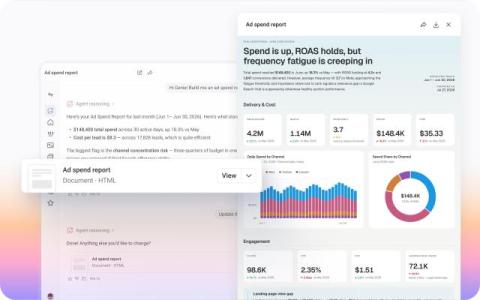
Stop Building Dashboards. Start Having Conversations with Data.

The dashboard was supposed to set your data free. Instead, it became a beautiful prison. You built the perfect visualization. Metrics aligned, charts polished, filters configured. Then someone asked a follow-up question, and suddenly you were back in the queue, waiting for an analyst to build another report. Dashboards are like printed maps in the age of GPS. They show you where things are at a specific moment. But they can’t reroute when conditions change.

Databox Analytics MCP for Teams: A Practical Guide

Every team in your company has the same problem: they need answers from data, but getting them is never fast. Marketing wants to know which campaigns are working. Sales wants to know which deals are stalling. Leadership wants to know if the business is on track. Each team asks different questions, but they all end up in the same place—waiting for someone else to pull the numbers. What if your teams could just ask questions and get answers instantly? That’s what Databox MCP enables.

Data Warehousing | Astera Centerprise Product Demo

Watch how Astera Centerprise streamlines your data warehousing process with a visual, no-code interface. From modeling and preparation to loading and automation, Centerprise helps you design and deploy modern data warehouses in a fraction of the time — all without writing a single line of code. Smarter. Faster. Effortless.

Oracle JDK to OpenJDK: A Guide to Reliable Migration Testing

One of the most common infrastructure changes Java developers and operators are dealing with today is the migration from Oracle Java to OpenJDK. The reason is the licensing changes made by Oracle and the maturity of the OpenJDK distributions. The migration process is quite simple: replace the JDK, recompile the code, and redeploy the application. However, the differences between the two runtimes can lead to unexpected issues that are not caught by unit tests.