Systems | Development | Analytics | API | Testing

The latest News and Information on Software Testing and related technologies.
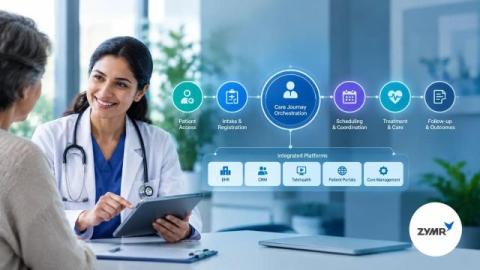
How to Improve Interoperability in Healthcare: A Practical Roadmap (2026)

Healthcare interoperability enables clinical, administrative, and financial systems to exchange usable health information securely. It connects EHRs, payer platforms, laboratories, pharmacies, medical devices, and patient applications. In 2026, interoperability requires more than transferring data between disconnected systems. Healthcare organizations must standardize data models, resolve patient identities, govern access, maintain semantic consistency, and support real-time API-based workflows.

Chaos Monkey Won't Find Your Bug

We shipped a chaos feature that never caused any chaos. Our mock server has had a fault-injection effect for years with a straightforward job: withhold the response entirely and see whether the caller copes. Last week I audited it against the actual code path. It had never withheld anything. The handler returned early without writing a response. Go’s net/http then did what it is designed to do, which is synthesize a 200 OK and flush the recorded body.

Top Challenges of Interoperability in Healthcare and How AI Is Helping Solve Them

Healthcare interoperability enables clinical and administrative systems to exchange usable patient information. However, connectivity alone does not ensure accurate interpretation or workflow compatibility. Many of the challenges with interoperability in healthcare have less to do with moving data and more to do with whether the receiving system understands what that data means. FHIR standardizes healthcare data exchange through structured resources and implementation frameworks.

Take a Tour of the Future of Modern PHP Management

Better PHP management has arrived. Introducing the Zend Web Platform, available in both Core and Enterprise editions. Built for modern PHP applications, the platform helps development teams improve security, observability, scalability, and efficiency across their infrastructure. In this walkthrough, we'll explore both editions of the Zend Web Platform, which offer a powerful command center that provides a single pane of glass into the health and performance of your PHP applications. See how it delivers.

Why Determinism & Realism Are So Critical in Enterprise Synthetic Data

Generating synthetic data is one thing. Trusting it is another. As enterprises adopt synthetic data for development and testing, important questions quickly emerge: Can it be reproduced consistently? Does it accurately reflect real-world business scenarios? In fact, our survey of enterprise leaders found that “consistent, high-quality test data to reduce defects” was their priority in test data automation at 43%.

SmartBear MCP for Zephyr: Connect your testing system of record to your AI tools

Your SmartBear Zephyr test data holds the answers you need before you ship: what’s covered, what passed, where the risk sits. That data has always lived one context switch away, behind the Jira UI. The SmartBear MCP Server changes that. It brings your Zephyr test data into any MCP-compatible AI client, so quality keeps pace with how fast your team builds. This guide covers where testing sits in the AI age, what MCP is, and how it unifies data visibility within your Zephyr workflow.

Enterprise Guide to Prompt Injection Testing: Securing Generative AI Systems

The swift introduction of Large Language Models (LLMs) and autonomous agents to business software ecosystems has posed a fundamental security issue: the unification of code and data. Traditional software designs carefully separate user input from operational commands. LLMs, on the other hand, are fed system commands, retrieved documents, user communications, and third-party API answers all in one context window.

QMetry vs. TestRail: Which is better for enterprise QA teams?

Choosing an enterprise test management platform is an architecture decision, not just a feature checklist. That choice comes down to how the platform stores data, how deeply testing connects to development, how far reporting and traceability extend, and how much the platform can absorb as testing volume, automation, and compliance requirements grow.