Systems | Development | Analytics | API | Testing

Modern Software Development For Today's Systems & Applications

The latest News and Information on Software Testing and related technologies.

Best Practices to Adopt for D365 F&O Automation Testing: How Top Retailers Are Winning with No-Code Automation
Are you still relying on manual testing for your Dynamics 365 Finance & Operations (D365 F&O) environment? In today’s fast-paced digital landscape, where Microsoft rolls out frequent updates and business needs evolve rapidly, manual testing is no longer just inefficient. It’s a strategic risk.

GDPR vs EU Data Act: Key Differences
Find out the key differences between GDPR (focused on data privacy) and the EU Data Act (focused on data ownership and portability). In this clip from the OpenLogic webinar, "Navigating EU Compliance: Open Source Strategies for Digital Sovereignty and Resilience", Perforce CISO Aaron Kiemele explains that contract clauses locking data into proprietary silos are now hard to enforce, and businesses must have credible, tested plans to exit a software platform if data policy or residency requirements shift.

EU AI Act: What Businesses Need to Know
Get information about the practical compliance requirements of the EU AI Act, the first AI regulatory framework with real enforcement teeth. In this clip from OpenLogic's webinar "Navigating EU Compliance: Open Source Strategies for Digital Sovereignty and Resilience", Perforce CISO Aaron Kiemele walks through classifying AI systems by risk level, establishing human oversight and audit trails, and documenting training data provenance — while noting that these steps are straightforward but frequently overlooked by organizations.

DORA Compliance for Open Source Explained
DORA's most surprising requirement may be that financial services organizations are responsible for the security and resilience of every third-party vendor and open source dependency in their stack. If a library you depend on fails, that risk is yours to own. Learn more about DORA compliance and how to stay compliant in this clip from the OpenLogic webinar, "Navigating EU Compliance: Open Source Strategies for Digital Sovereignty and Resilience," which aired in February 2026.

EU Compliance: Open Source Strategies for Sovereignty and Resilience
In today's geopolitical environment, asking 'are we compliant?' is no longer enough. The real question is whether your business can survive if the ground shifts beneath it — through trade wars, embargoes, or regulatory changes that threaten your software supply chain.

How AI is Transforming SME Lending
For decades, SME lending has lived in a strange space. On one hand, small and medium enterprises are the backbone of every economy. They drive employment, fuel innovation, and keep local markets alive. On the other hand, getting access to credit has always been frustratingly difficult for them. Why? Because traditional lending systems were never designed for them. Banks relied heavily on collateral, long credit histories, and static financial statements.

Dealing With Fire: Building Your QA Crisis Management Strategy (Part 4)
Quality crises happen. A hotfix derails another feature. A third-party service breaks your checkout flow. A bug slips through, and your inbox lights up. The question isn't if but when.
Rust Language Support in Perforce Static Analysis Accelerates Secure, AI-Driven, Multi-Language Embedded Development Lifecycles
Single static analysis workflow catches critical errors beyond memory-safety for mixed-language systems, before defects are introduced during the coding phase of the development lifecycle.
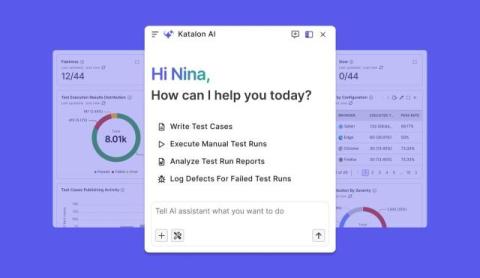
Meet Katalon AI Assistant: Your Extended QA Team
AI-assisted development means more code, faster release cycles, and a testing surface area that keeps expanding, but QA team size hasn't kept pace. The result is a pressure most QA engineers know well: you're not behind because you're slow. You're behind because the math no longer works. Most tools respond by adding AI at the margins: a suggestion feature here, a copilot shortcut there.