Installing and updating the Bitrise CLI
Learn how to install our open source runner, the Bitrise CLI on your Mac/PC with Homebrew or curl, and run builds, Steps, or any automation locally on your machine.


Errors are undesirable for users and you should do everything in your control to keep users away from them. However, they are of utmost importance for developers. They allow developers to understand the inaccuracies and vulnerabilities in their code by alerting them when their code breaks. They also provide relevant information about what went wrong, where, and what can be done to make amends.
Erlang & Elixir are ready for asynchronous work right off the bat. Generally speaking, background job systems aren’t needed as much as in other ecosystems but they still have their place for particular use cases. This post goes through a few best practices I often try to think of in advance when writing background jobs, so that I don’t hit some of the pain points that have hurt me multiple times in the past.
Text encoding is fundamental to programming. Web sites, user data, and even the code we write are all text. When encoding breaks, it can feel like the floor is falling out from under you. You're cast into a dimension of bitmasks and codepoints. Logs and backtraces are useless. You consider trading your text editor for a hex editor. But there's hope! In this article, Jose Manuél will show us how encoding errors happen, how they're expressed in Ruby, and how to troubleshoot them.
We are going to be covering how to deploy a React Native Expo app to Appetize, a platform that lets you run mobile apps in your browser.
Our instrumentation uses built-in extension mechanisms where possible, such as Django’s database instrumentation. But often libraries have no such mechanisms, so we resort to wrapping third party libraries’ functions with our own decorators. For example, we instrument jinja2 ’s Template.render() function with a decorator to measure template rendering time. We value the correctness of our instrumentation a lot so that we do not affect our users’ applications.
When something crashes in an app, fixing the bug is usually quite straightforward. But apps can also be blighted by bugs that don’t result in crashes, and this is where things start to get interesting. To find and fix these bugs, you will require as much information as possible and probably a combination of tools. Let me explain a process we know as ‘bug forensics’, based on a real bug that has impacted one of Bugfender’s customers.
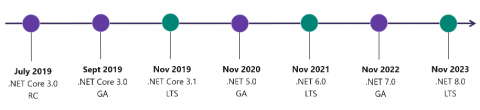
If you’re a developer of .NET supporting enterprise apps developed in the .NET framework, you should know how the .NET 5 would impact your current enterprise app. Moving forward, there will be only one .NET to target macOS, Windows, Linux, iOS, Android, and more. Along with the release, there are new .NET APIs, language features, and runtime capabilities. The look and feel of the code and project files in .NET 5 would be the same, regardless of the type of app being created.