Systems | Development | Analytics | API | Testing

Human Judgment Is the Missing Variable in Your AI Strategy

Across teams, organizations, and industries, people are starting with AI instead of the problem they want to solve. As a result, AI outputs from different tools: This is a process failure, and it's accelerating. Human-in-the-loop (HITL) AI is a framework that integrates human oversight directly into the machine learning lifecycle. Rather than relying on fully autonomous systems, HITL uses humans and machines collaboratively to train models, evaluate outputs, and handle complex decision-making.
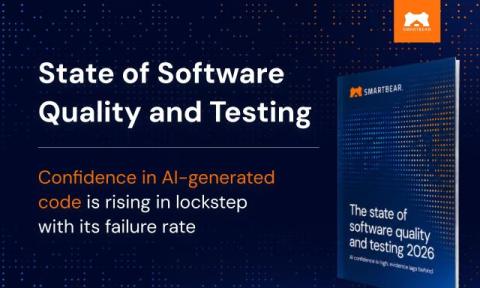

Confidence in AI-generated code is rising in lockstep with its failure rate

If you only read the headlines this year, you’d think AI makes shipping good software easier than ever. Yet, this was the year of very public AI-coding incidents. PocketOS’ production database deletion and a Vercel AI agent shipping unverified code are just two examples of AI-authored code shipped with confidence that turned out to be wrong. And, of course, these AI-coding incidents are distinct from Agentic AI orchestration incidents like the HuggingFace hack by OpenAI.

Corporate Sustainability Needs Better Integration, Not Another Ambition

Corporate sustainability has no shortage of ambition. Over the past several years, companies have set increasingly ambitious climate targets, expanded disclosures, and invested significantly in understanding and measuring their environmental impact. But working in the technology infrastructure industry has made one thing clear to me: Targets don't reduce emissions. Decisions do.

How to Build a Self-Service AI Platform Without Losing Control of GPUs, Data, or Security

Most enterprise AI infrastructure conversations land on the same tension. Builders want self-service: instant access to GPUs, a stable endpoint for a model, a notebook, or a fine-tuning run that starts without a ticket. Platform teams want per-team quotas, identity-aware access, audit trails, tenant isolation, and cost attribution they can defend. Both sides are right, and most platforms make you choose between them because self-service and control get layered onto a base that was designed for neither.

From BI to Agentic AI: Why the Dashboards You Built Are the Foundation for Agents

Two questions stall almost every agentic AI rollout: Is it secure? And what is this going to cost us? Both get harder to answer the longer you wait to ask them, and easier to answer than most teams assume. If you've already invested in a robust data analytics platform like Qlik, you're closer to a secure, governed, and cost-effective agentic AI deployment than the market's “rip and replace” narrative suggests.

How to Build an Effective Database Testing Strategy for Reliable Releases

Green build pipelines lie. Your automated unit suites can execute without a single failure, API contracts can validate cleanly, and browser regression sweeps can pass with pristine checkmarks. Yet the moment a release hits production, software must interact with state. A single unindexed foreign key, an overlooked lock escalation on a high-throughput table, or an uncalibrated default constraint will bring an entire platform to a halt while your CI dashboards remain reassuringly green.

SSO for Healthcare: How Single Sign-On Works in Clinical Environments

Healthcare organizations are abandoning legacy identity systems. In 2026, a 250-bed hospital still running standalone credentials across EHR, pharmacy, and billing systems faces escalating regulatory risk, operational friction, and insider threat exposure. Enterprise SSO for healthcare solves this by unifying identity across HIPAA-regulated applications while enforcing zero-trust principles at every access point. But SSO for healthcare isn't just Okta or Azure AD out-of-the-box.

Honoring Absa: Achieving 96% less test creation time with SmartBear QMetry and SmartBear Reflect

At SmartBear, we’re dedicated to empowering teams by delivering application integrity: continuous, measurable assurance that their software works as intended, even as AI accelerates the SDLC. The AI Test Innovators Award: QMetry + Reflect celebrates customers who are using AI to reimagine how they create, maintain, and manage tests – without sacrificing rigor or reliability.

Devise for Ruby on Rails: Setup, Modules & Rails 8 Auth

Devise is a full-featured authentication gem for Ruby on Rails, built on Warden. It provides registration, login, password recovery, session timeout, and account locking via 10 composable modules. Install it with bundle add devise, then run rails g devise:install and rails g devise User. It works with Rails 7 and 8; Rails 8's built-in generator covers only simpler needs.