Tricentis
The Tricentis platform accelerates testing of all your applications, data, and business processes and integrates with tools across your delivery pipeline.


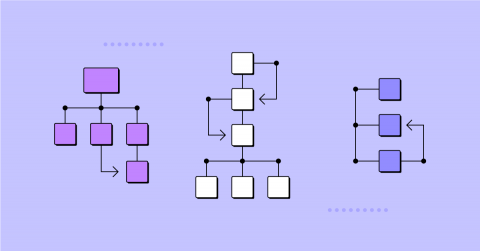
Data modeling is the process of organizing your data into a structure, to make it more accessible and useful. Essentially, you’re deciding how the data will move in and out of your database, and mapping the data so that it remains clean and consistent. ThoughtSpot can take advantage of many kinds of data models, as well as modeling languages. Since you know your data best, it’s usually a good idea to spend some time customizing the modeling settings.
Bitrise acquires Flare.Build. By adapting Flare.Build’s advanced caching and CDN technology to tools beyond Bazel, Bitrise can speed up feedback loops, iterate faster, and multiply app build performance by up to 10x.
Chris Tozzi reviews the most popular JavaScript test automation frameworks and presents several things to consider as you select the best option for you and your organization. JavaScript consistently ranks as the world’s most popular programming language among developers. It should come as no surprise then that a variety of JavaScript test automation frameworks are available to help developers test JavaScript apps.
There is no doubt that CodeIgniter is one of the best PHP frameworks for developing websites. However, before using CodeIgniter for development, every PHP developer should be aware of all the features of CodeIgniter to use it to its full potential. In this article, we will go over all the great features of the CodeIgniter framework in depth. It will help you understand how to use the CodeIgniter best for your development needs.
Every financial professional understands that the numbers matter a great deal when it comes to reporting financial results. Accuracy, consistency, and timeliness are important. Those same professionals also know that there’s substantive meaning behind those numbers and that it’s important to tell the stories that lend additional depth and context to the raw financial statements.
State management is a very controversial topic in the Flutterverse, with many holding strong opinions on it. In the last few weeks, my Twitter feed has been overwhelmed with threads about state management, covering the entire spectrum of opinions, from GetX/BLoC/Riverpod fanatics on one side to a few rare enlightened ones on the other side who recommend not using any state management at all. While I personally enjoyed almost all of them, the impact on the Flutter community has been quite severe.
Many API developers and companies struggle to find ways to set up systems to monetize their APIs easily. Some are simple but not customizable and some are complex and require massive engineering effort to actually get it all running. To make things easier, Moesif created the Billing Meters feature which gives massive customizability but with a minimal amount of code and engineering effort to monetize APIs.
Recently, conversations have been increasing around OpenTelemetry; it is gaining more and more momentum in Node.js development circles, but what is it? How can we take advantage of the key concepts and implement them in our projects? Of note, NodeSource is a supporter of OpenTelemetry, and we have recently implemented full support of the open-source standard in our product N|Solid. It allows us to make our powerful Node.js insights accessible via the protocol.