Systems | Development | Analytics | API | Testing

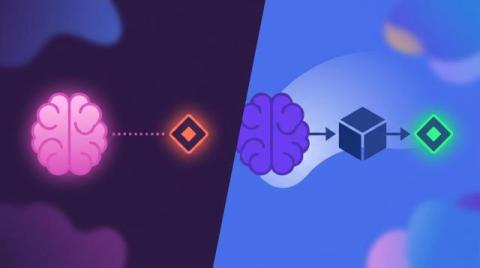
New: Trusted data for the people and the AI making decisions on it

Ask three people in your company to pull the number of active customers this month, and you’ll probably get three different answers, even though each person labeled the metric the same way. One counts everyone who logged in, another counts only paying users, and a third filters down to a single plan tier. Nobody is wrong here. They’re all working from real data; they just never agreed on a single definition. Do that enough times, and the data itself becomes the thing everyone argues about.

OctoPerf MCP Server, Fully On-Premise: AI Load Testing With a Local LLM

But a recurring question came from banks, hospitals, defense and public-sector teams: what if nothing is allowed to leave our network, not even the prompt? This article answers that question with a full walkthrough.. We will stand up a 100% on-premise, air-gapped stack, and it only takes two things to install: OctoPerf Enterprise in Docker, and a local Qwen3 large language model running in LM Studio, which doubles as the Model Context Protocol client.

Agent development and AgentOps with BigQuery, ADK, and MCP

Join this session to learn about Agent Development Kit (ADK) and Model Context Protocol (MCP) integration methods that standardize how agents connect to your data while removing the need to build custom database connectors from scratch. Discover how to build agents with the ADK that accesses BigQuery for analysis, Google Maps for geospatial insights, and AlloyDB for transactions – all in a single workflow. Learn how to implement agent operations (AgentOps) for deep observability into both agent performance and cost with a single line of code.

Demo: Real-Time Context Engine for Fleet Management

Use Real-Time Context Engine and Claude, or any MCP-compatible client, to explore operational data using natural language in real time. That includes everything from simple lookups to multi-step investigative questions like: Confluent’s Real-Time Context Engine gives AI agents live access to operational context as events happen across the business. Instead of relying on stale snapshots, agents can query and reason over continuously updated tables in real time.

Debug a Node.js Memory Leak in Minutes with AI-Powered Heap Snapshot Analysis

Memory leaks are among the most frustrating production issues to investigate. At first, everything looks normal. Requests are processed successfully, users aren't reporting problems, and the application appears healthy. Then memory usage starts climbing. Garbage collection runs more frequently. Performance degrades. Eventually, the process becomes unstable or crashes altogether. Detecting a memory leak isn’t even half the battle.

Your Vercel AI SDK app is missing a session layer

If you have built an AI chat feature with the Vercel AI SDK, you have used its useChat hook. You give it your messages, and it streams the reply into your UI. You may have seen our post on the custom transport we built for the Vercel AI SDK. It swaps useChat's default transport for Ably AI Transport, adding resumable streams, cross-device and multi-user sync, conversation branching, history compaction, and stop-and-approve controls.

Stop vs disconnect - why canceling AI streaming is harder than it looks

You add a stop button to your AI chat app: a customer support agent, a coding assistant, a research tool the user can steer mid-task. A user clicks it mid-response. The frontend stops rendering. Then you check your backend logs and realize the underlying generation is still running, and you’re still paying for every token. This is not a bug.

Get Started With LLM Proxy in WSO2 API Platform AI Gateway

Run your first LLM proxy on WSO2 Platform AI Gateway in minutes — no cloud setup required, just Docker. This quickstart walks you through spinning up the WSO2 Platform AI Gateway as a standalone component on your own infrastructure. You'll add an OpenAI provider configuration (including API key auth and access control rules), deploy an LLM proxy that routes through it, and verify live responses end to end. What you'll set up.