For our latest specialist interview in our series speaking to technology leaders from around the world, we’ve welcomed James Kaplan CEO and Co-Founder of MeetKai. He founded the startup with his Co-Founder and Chairwoman, Weili Dai, after becoming frustrated with the limitations of current automated assistants. Kaplan has had a true passion for AI and coding since he was six. He wrote his first bot at only nine years old and wrote the first original Pokemon Go bot.
With hackers now working overtime to expose business data or implant ransomware processes, data security is largely IT managers’ top priority. And if data security tops IT concerns, data governance should be their second priority. Not only is it critical to protect data, but data governance is also the foundation for data-driven businesses and maximizing value from data analytics. Requirements, however, have changed significantly in recent years.
Historically, maintenance has been driven by a preventative schedule. Today, preventative maintenance, where actions are performed regardless of actual condition, is giving way to Predictive, or Condition-Based, maintenance, where actions are based on actual, real-time insights into operating conditions. While both are far superior to traditional Corrective maintenance (action only after a piece of equipment fails), Predictive is by far the most effective.
In traditional data warehouses, specific types of data are stored using a predefined database structure. Due to this “schema on write” approach, prior to all data sources being consolidated into one warehouse, there needs to be a significant transformation effort. From there, data lakes emerge!
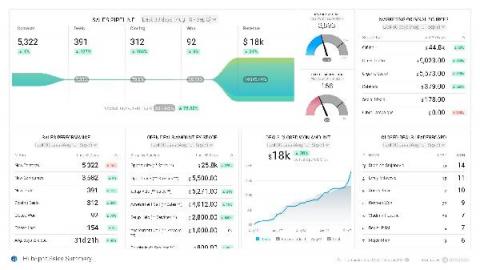
Over the past two decades, marketers have faced an uphill battle in trying to turn marketing into a fully data-driven discipline. Our challenge is not that we don’t have enough data but that data has been difficult to access and use. Marketing, sales, and product data is scattered across different systems, and we can’t get a complete picture of what is going on in our businesses.
Frequent software delivery drives innovation. According to the State of DevOps Report, high-performing organizations deploy 200x more frequently and have 3x lower change failure rates than lower-performing organizations.This type of velocity and scale is only possible for a highly capable engineering team with an advanced DevOps infrastructure. However, legacy and startup organizations may have a harder time accomplishing this.