Query templates in BigQuery data clean rooms let you create pre-defined queries that run against specific tables, reducing the risk of data exfiltration.
A few years ago, we looked across many deployments and noticed a pattern: teams would build prototypes, spin up ML pipelines, and then stall. The model’s accuracy dropped. The “aha insights” dried up. The data scientists would get stuck waiting for dashboards to refresh, or data to be cleaned.AI is sexy. It sells. But it doesn’t do itself. The missing piece? Data readiness. Not just fast data.
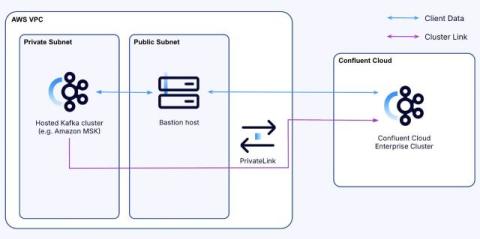
Modern businesses don’t run in just one place. Your applications might live in Amazon Web Services (AWS), your analytics in Microsoft Azure, and critical systems on-premises. The challenge? Keeping all that data connected and flowing in real time—without adding complexity or risk. As more organizations adopt these multicloud strategies, the need for secure, private data replication has become critical.
Kafka cluster-to-cluster data replication is critical to many use cases: disaster recovery (DR), cloud or data center migration, testing applications with production-like data, and multi-region data distribution. Easy replication of data between clusters: The business case is clear, but the cost model is not. Some solutions appear free but impose heavy operational burden.
Enterprise data warehouses face a fundamental challenge. For decades, organizations treated them as static projects—build once, maintain constantly, rebuild when requirements change. As data volumes surge and business needs accelerate, this approach creates bottlenecks. Organizations need autonomous data warehouses: self-sustaining ecosystems that adapt and evolve with minimal manual intervention.
It’s 3 a.m., and an alert fires: Your critical Kafka Streams application is lagging. The frantic troubleshooting begins. Is it a consumer group rebalance? You start searching through application logs across multiple pods. Is it a problem with the Apache Kafka cluster itself? You switch to your cluster monitoring dashboards to check broker health. Or is there a silent bottleneck hidden deep in your application code? Without the right instrumentation, you're flying blind.
Embedded business intelligence (BI) isn't just about adding charts to your app; it's about making your product experience — and your users — more valuable and competitive. If you’d like to try an embedded BI solution for your SaaS platform, get a free trial. Blog Contents show No more separating analytics from your SaaS Embedded BI: A quick recap Most common embedded BI use cases 1. Empowering customers with self-service analytics 2. Unlocking embedded BI for SMBs 3.
Enterprise data warehouses have reached an inflection point. For decades, organizations treated them as static projects—build once, maintain constantly, rebuild when requirements change. But as data volumes surge and business needs accelerate, this approach no longer scales. The modern enterprise needs something fundamentally different — a modern data warehouse that behaves like an autonomous ecosystem and sustains itself.
Data monster slowing down your business? Say goodbye to bottlenecks and hello to real-time data, scalable AI, and lower TCO with Confluent—the World’s Data Streaming Platform.