

Systems | Development | Analytics | API | Testing

The Top 5 Root Causes of False Failures in Test Automation And How AI Can Help Eliminate Them

False failures, a leading cause of flaky tests, occur when a test reports a defect that does not exist. The application works, yet the test suite says otherwise. The cost goes well beyond a few minutes of investigation. Perforce's 2026 State of DevOps Report found 50% of test failures stem from brittle scripts and UI changes, not actual defects, and 70% of automation effort goes toward fixing those scripts. Most teams are spending their automation budget on maintenance, not coverage.


Connect agentic testing with Jira, Linear, and Azure DevOps| SmartBear BearQ

Watch this video to see how see how SmartBear BearQ keeps bug reports and test results in sync with Jira, Linear, and Azure DevOps at AI speed and scale, with no manual copy-pasting. BearQ’s agentic QA system connects to the tools your team already relies on, so its three built-in agents can pull in context and push results right where your team lives.

New in PHP 8.6: Polling API

PHP 8.6 will include a new Polling API (RFC) that was developed as part of the PHP Foundation’s “Stream Improvement” project. Since we at Tideways place a special emphasis on PHP performance, we see this as a significant improvement for PHP users; one that has so far gone largely unnoticed by the PHP community. We hope that a wider audience will recognize its potential.

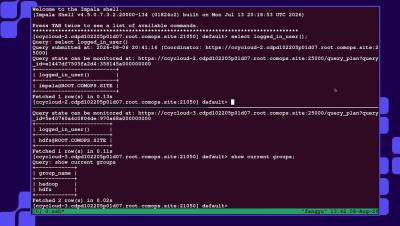
Cloudera Impala Demo: Delegated Admin for SQL-Based Access Management

See how Cloudera Impala's Delegated Admin for SQL-Based Access Management helps enterprises decentralize access management, reduce IT bottlenecks, and streamline data access administration. This demo shows how delegated administration enables authorized teams to manage access through SQL, reducing reliance on centralized IT administrators and manual UI-based processes.

Manual Testers Are Getting Promoted

AI isn't coming for the manual tester's job. It's coming for the worst parts of it. What's left is the part you love, the part that always mattered most. And it's about to matter a lot more. There's a lot of talk right now about AI agents that can run the tests teams already have, keep them working as the application changes, and do it at a scale no team could staff. If you're a manual tester, I can guess what goes through your head when you read that. Great for the company. Where does it leave me?

What 2026 Building-Performance Requirements Reveal About Real Estate Data Infrastructure

2026 building-performance requirements increasingly depend on reliable property, meter, utility, and energy data, and that same normalized data can support compliance, reporting, analytics, and energy management. In 2026, several US jurisdictions reach building-performance deadlines, spanning recurring annual benchmarking, first-time compliance dates, and emissions-reduction requirements. The rules differ by jurisdiction, but many draw on the same property, meter, and utility records.

Making the Most of Your Logs in Rails

Rails logs through Rails.logger — on Rails 8.1, a BroadcastLogger that writes tagged lines to STDOUT in production and to log/development.log in development. Six levels exist: debug, info, warn, error, fatal, and unknown; production defaults to info via RAILS_LOG_LEVEL. Good log messages are descriptive, carry context like request IDs, and become structured JSON when machines read them.

Observability Never Really Shifted Left

We made software development faster. Now we need to make validation faster, too. For the last decade we have shifted development left. Testing, security, performance, and CI/CD all moved closer to the developer. Observability mostly did not. It still starts after deployment (we covered the incident side of this in Your Observability Stack Found the Fire), which means the people writing the code rarely have meaningful production behavior to observe while they build.
Sponsored Post

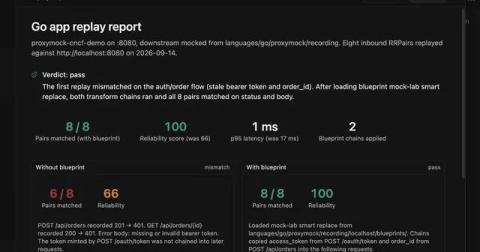
Use AI and traffic replay to test AI-generated code

When I ask an AI agent to change code, I also want it to run the application and test what it changed. Asking it to write some tests is a start. But if it invents the expected responses from the same assumptions it used to write the code, those tests can miss the same mistake. Traffic replay gives the agent something concrete to test against: requests and responses captured from a working application. The agent can run those requests against its changes, inspect the differences, and repeat the test after a fix. I can open the same results and check its work.