

Systems | Development | Analytics | API | Testing

What millions of mobile builds reveal about high-performing teams: A conversation with Arpad Kun

‍Mobile development has a reputation for being slow, complex, and harder than it needs to be. Platform quirks, rigid review gates, and ever-growing app complexity can make it feel like the toolchain is working against you. But the data tells a different story. We analyzed tens of millions of builds across thousands of mobile teams on Bitrise, spanning three years of real-world data from 2022 to 2025. The results challenge some common assumptions, and confirm others.

Ep 63 | Open Lakehouse Architecture: How to Scale AI to Production

Open lakehouse architecture is becoming the foundation for production AI and enterprise AI at scale. In this episode of The AI Forecast, Dipankar Mazumdar, Director of Developer Relations at Cloudera and co-author of the book “Engineering Lakehouse with Open Table Formats,” joins Paul Muller to explain why open lakehouse architecture is critical for moving from AI pilot to production AI.

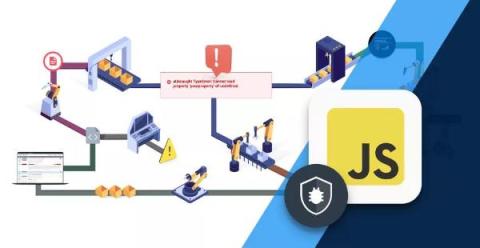
JavaScript Exception Handling: try, catch, throw, async & Best Practices

Exceptions are inevitable. It’s how we deal with them that matters. An effective exception handling regime is the difference between an app that only works in sandbox and one that can adapt and scale in the real world. JavaScript can throw up all kinds of weird and wonderful exceptions, because it runs in inherently unpredictable environments. So we’ve put together this guide to give you a clear, repeatable plan for handling them.

Jenkins and Codemagic: Better Together for Mobile CI/CD

Jenkins has earned its place at the center of enterprise CI/CD. For organizations building backend services, orchestrating multi-stage deployments, and managing complex polyglot pipelines, Jenkins delivers the flexibility and control that engineering teams depend on. Ripping it out isn’t a conversation most organizations want to have - nor should it be. But mobile is different.

Jenkins vs Codemagic: Why Mobile Teams Are Making the Switch

If you’re a mobile developer running builds on Jenkins, you already know the drill: a flaky agent goes down on a Friday afternoon, your Xcode version is three months behind, and the DevOps engineer who set the whole thing up left six months ago. The builds ship eventually - but at what cost? Jenkins is a powerful, battle-tested automation server. For teams building web backends or managing complex polyglot pipelines, it earns its place.

Simplified Kafka Cluster Migration: Strimzi to AWS Express Brokers with Lenses

Migrating Kafka clusters doesn't have to be a complex or high-risk operation. In this technical walkthrough, we demonstrate how Lenses K2K managed through Lenses 6 simplifies the migration of mission-critical banking applications from Strimzi to AWS Express Brokers with minimal downtime and zero data loss.

Tricentis AI Workspace: The new control plane for autonomous quality engineering

AI is reshaping how software gets built, tested, and delivered. For quality engineering teams, AI agents promise extraordinary acceleration by automating analysis, executing tests, generating assets, and orchestrating tasks across the SDLC. But when enterprises begin experimenting at scale, new challenges appear. Where are these agents running? What exactly are they doing? Who approves their decisions? How do we govern them safely?

Queues for Apache Kafka Is Here: Your Guide to Getting Started in Confluent

Queues for Kafka is now in General Availability (GA) on Confluent Cloud and is coming soon to Confluent Platform, coinciding with the Apache Kafka 4.2 release. This milestone brings production-ready queue semantics and elastic consumer scaling natively to Kafka through KIP-932, enabling organizations to consolidate their messaging infrastructures while gaining elastic consumer scaling and per-message processing controls. Get started.

Agentic Payments: Redefining the Future of Payments for Enterprises

‍ Enterprise payment systems are at a breaking point: rising volumes, tighter margins, and ever-more sophisticated fraud are pushing traditional automation to its limits. The AI-enabled payments market was valued at $38.36 billion in 2024 and is projected to grow over the next decade. As firms seek smarter, real-time decisioning and risk control, highlighting how indispensable AI has become in payment stacks today. -