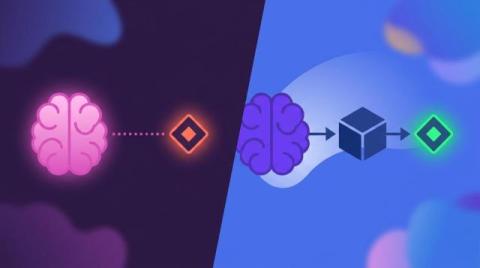

From Dashboards to AI Agents: Huel's Analytics Journey

You’ve rolled out a modern data stack, built self-service dashboards, and empowered your team to ask their own questions. Job done, right? Not quite. The data landscape is shifting rapidly beneath our feet, which makes it critical to understand how to build your AI for BI platform so you can scale and navigate technology evolutions.
From Experiment Tracking to AI Factory: What Changes When AI Becomes a Shared Enterprise Capability

The term “AI factory” is usually introduced as a hardware story: racks of accelerators, high-speed networking, and validated reference designs. That part is real, but it is not the part most organizations struggle with. The harder shift is operational. Moving from AI as a set of individual experiments to AI as a shared, governed capability that many teams depend on changes how compute is allocated, how environments are built, who owns the platform, and how the work is governed.

How to Build a Marketing Dashboard in One Conversation

Describe the metrics in plain English. AI Analyst builds them, assembles the dashboard, and next month’s report starts from this month’s build. To build a marketing dashboard in one conversation, describe each metric you need to AI Analyst inside Databox in plain English, confirm the components it proposes, and ask for a dashboard assembled from the metrics you defined.

Governed Data Pipelines: Meeting SOC 2 and Regulatory Requirements

Organizations moving healthcare, financial, or EU-resident data through an ETL pipeline face a specific constraint: the pipeline itself has to be compliant, not just the destination warehouse. Every hop a record makes from source system to transformation layer to warehouse, is a point where sensitive data can be exposed, mishandled, or logged somewhere it shouldn't be. That makes the governance model of the pipeline tool itself part of the compliance picture, not an afterthought to it.

Source to Target Data Mapping in Astera Centerprise

Watch an AI agent in Astera Centerprise map data from Dynamics CRM to Snowflake, field by field, with data transformation, in a no-code interface. This demo walks through a real data mapping scenario: a sales team's pipeline in Dynamics CRM (accounts, deal stage, close date, and deal amount in multiple currencies) needs to land in Snowflake every night for revenue and forecast dashboards. See how the agent reads both schemas, matches fields automatically, standardizes currency, and schedules the pipeline to run unattended.

Predictive Analytics in Real Estate: From Historical Reports to Forecasting

The forecasting model is often the smaller part of the job. In production, what makes predictive analytics in real estate reliable is the infrastructure around it: governed historical data, unified business entities, feature pipelines, model serving, monitoring, and integration into the systems where people work.

PDF Data Extraction in Astera ReportMiner

This video shows how Astera ReportMiner extracts structured data from PDFs in two ways: a reusable template for consistent layouts, and an AI-driven pipeline for documents that vary. Working from a mix of PDFs, digital and scanned, that vary in layout and quality, you can build a custom extraction logic in ReportMiner: Whether a PDF arrives with a known layout or a new one, it runs through the same pipeline into the same output, with fewer manual exceptions and less setup.

Ep 91 | Beyond the POC: AWS's Playbook for Enterprise AI Success

Most AI pilots never make it past the demo phase. AWS Machine Learning Lead Praveen Jayakumar has seen plenty of promising AI projects get stuck between a successful demo and production. Teams often define what success looks like without deciding what failure looks like, leaving underperforming projects alive long after they should have been shut down. As Praveen puts it, they become “zombie” AI projects.