Systems | Development | Analytics | API | Testing

Data Fragmentation: Definition, Causes and Fixes

Data fragmentation is what happens when the same business facts live in more than one system, in more than one shape, with no agreed way to reconcile the copies. The same customer exists under three identifiers; the same revenue figure changes depending on which team you ask. That is not the same as running many tools. An organization can operate a dozen systems and still be coherent — if every tool’s data lands in one place, under shared identifiers, with terms defined once.

AI mobile testing: where AI actually removes work from mobile app test automation

Most mobile automation programs don't stall because a tool can't tap a button. They stall on everything around the tap: the setup before the first test, a device lab nobody can keep current, maintenance that grows faster than coverage, and the moment someone asks "are we ready to ship?" and nobody has a clean answer.

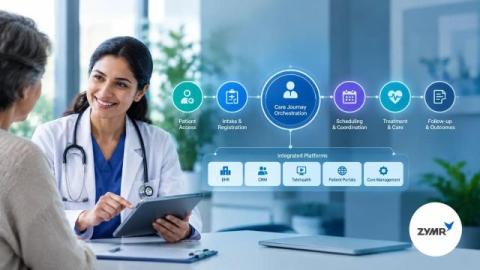
Best 10 Platforms for Care Journey Orchestration in Healthcare

Platforms for care journey orchestration connect patient data, clinical rules, and automated workflows. They coordinate tasks across healthcare systems, assign responsibilities, and track each step through completion. These capabilities help teams translate clinical plans into timely actions across the patient journey. For healthcare organizations evaluating care journey orchestration platforms in 2026, business value depends on specific workflow improvements.

Introducing Advanced AI Observability: See the Whole Agent Journey

Traditional observability was built around requests. A request comes in. A service processes it. A response goes out. You trace what happened in between. That model works well for APIs. It breaks down for AI. With agents, a single user request can trigger multiple model calls. An agent might invoke a tool, call another agent, query an MCP server, retry a model, hit a guardrail, and call another tool before finally producing a response. And all of this happens non-determinstically.

API & AI Summit 2026 Launch Recap

Standing up a production agent means taking it through six stages: At API & AI Summit, we announced the evolution of Kong Konnect into the AI Connectivity Platform and announced a slate of launches built around that idea. Here's what we launched, where each piece fits, and what you can use today. An agent that only runs when a person prompts it isn't autonomous. Real autonomy starts when something happens in the world, like a payment failing or a ticket opening, and the agent responds.

The Most Expensive Line in Your Data Budget Is the One You Can't See

Every data platform decision has a default setting, and the default is wait. Not because leaders think the current stack is great. Because “we’ll modernize next year” feels responsible. It sounds like discipline. It reads like you’re protecting the budget. Here’s the part that never makes it into that conversation: waiting is not the free option. It’s a spending decision, and it renews every month whether or not anyone signs off on it.

Human Judgment Is the Missing Variable in Your AI Strategy

Across teams, organizations, and industries, people are starting with AI instead of the problem they want to solve. As a result, AI outputs from different tools: This is a process failure, and it's accelerating. Human-in-the-loop (HITL) AI is a framework that integrates human oversight directly into the machine learning lifecycle. Rather than relying on fully autonomous systems, HITL uses humans and machines collaboratively to train models, evaluate outputs, and handle complex decision-making.

Confidence in AI-generated code is rising in lockstep with its failure rate

If you only read the headlines this year, you’d think AI makes shipping good software easier than ever. Yet, this was the year of very public AI-coding incidents. PocketOS’ production database deletion and a Vercel AI agent shipping unverified code are just two examples of AI-authored code shipped with confidence that turned out to be wrong. And, of course, these AI-coding incidents are distinct from Agentic AI orchestration incidents like the HuggingFace hack by OpenAI.

Corporate Sustainability Needs Better Integration, Not Another Ambition

Corporate sustainability has no shortage of ambition. Over the past several years, companies have set increasingly ambitious climate targets, expanded disclosures, and invested significantly in understanding and measuring their environmental impact. But working in the technology infrastructure industry has made one thing clear to me: Targets don't reduce emissions. Decisions do.